Discover our comprehensive range of high-precision components, laser machinery, indexable tool holders, and premium solid carbide geometries.
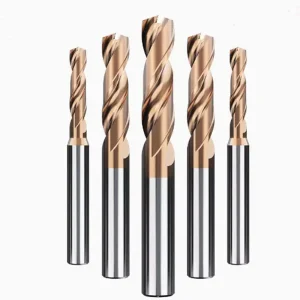
In the modern manufacturing landscape, where structural component design demands complex geometries and high material removal rates (MRR), the performance of your solid carbide end mills dictates operational profitability. Dongguan Carto Tool Co., Ltd. stands at the global frontier of specialized industrial cutting tools, engineering CNC machining systems, milling solutions, and advanced metallurgical configurations.
Established as a focused cutting tool workshop, Carto Tool has scaled systematically to become a premier research-backed industrial supplier. Through the fusion of micro-grain tungsten carbide substrates, optimized coating topologies, and cutting-edge variable helix configurations, our tooling guarantees thermal stability and maximum wear life across critical manufacturing sectors.
Our core focus addresses the most strenuous requirements of high-speed machining (HSM). By optimizing structural geometries, we help major global manufacturers in the automotive, aerospace, precision mold processing, and defense sectors resolve vibration, chatter, and early tool-wear anomalies, scaling tool life expectancy and surface finish results.
How Carto Tool transitioned from a specialized local cutting workshop to an international benchmark of manufacturing precision.
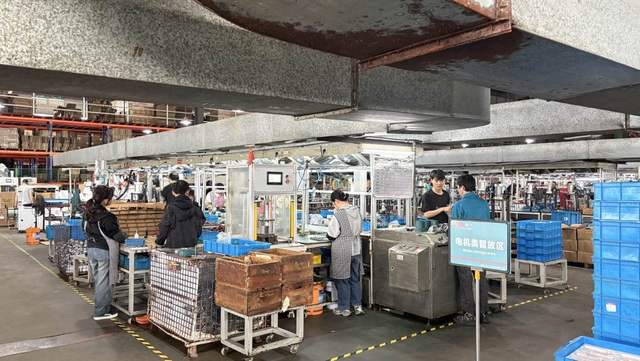
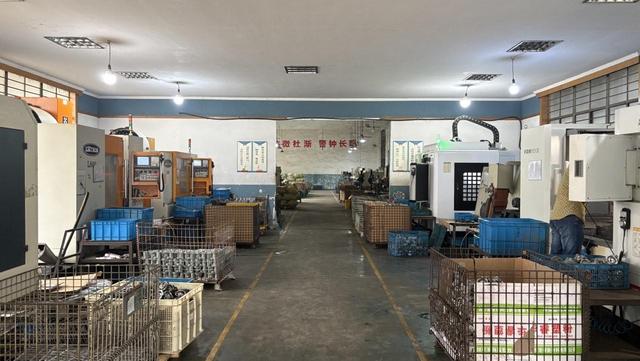
In its early stages, Dongguan Carto Tool Co., Ltd. operated as a boutique milling and turning tooling facility, manufacturing basic high-speed steel (HSS) and structural carbide tools for regional machine shops. The explosive expansion of domestic industrial production spurred the need for highly advanced CNC milling technologies. Understanding this market trajectory, Carto Tool strategically diverted profits back into material science and industrial metallurgy research.
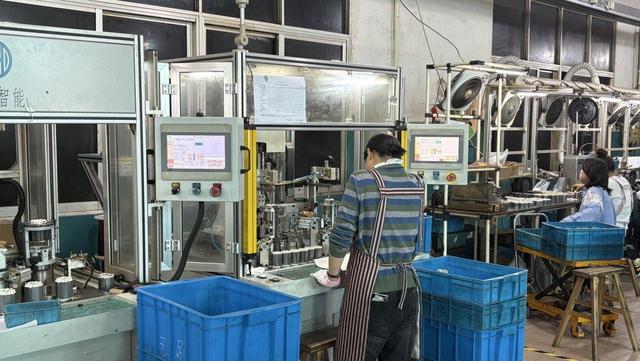
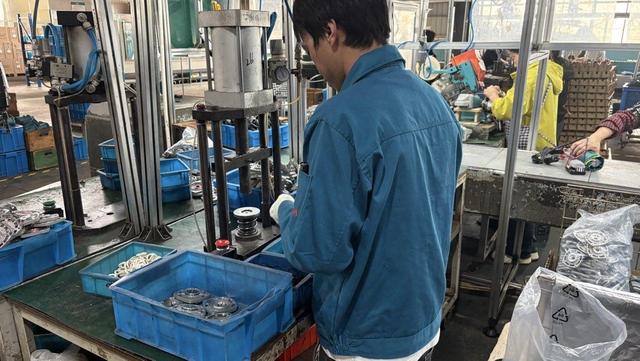
Throughout our developmental phase, we recognized that the key to tool predictability lies in raw material refinement and precision coating deposition. By procuring ultra-micrograin tungsten carbide substrates (average grain sizes ranging from 0.2μm to 0.5μm) and installing European 5-axis CNC grinding centers, we elevated our cutting geometries to compete on a global scale. We expanded tooling durability by developing thermal-barrier PVD coatings capable of maintaining high-hardness parameters at temperature ceilings exceeding 900°C.
Today, Carto Tool delivers complex customized solutions globally, reducing cycle times and tooling overheads for high-volume manufacturing setups.
The shift toward high-efficiency milling (HEM) requires complex innovations in material composition and macro-geometric profiles.
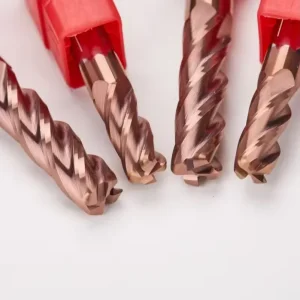
Standard uniform-helix tools suffer from structural harmonics and chatter during deep cavity milling. Variable helices and asymmetrical flute indexing scatter mechanical vibrations, maximizing stability and metal removal rates.
Modern milling demands high heat tolerance. Advanced silicon-doped nanocomposite and multi-layered nitride coatings form sacrificial protective aluminum-oxide layers at the cutting edge to handle high thermal thresholds.
Transitioning to ultra-fine cobalt-rich structural matrices delivers the high impact resistance required to prevent chipping under high shock loads, keeping cutting edges sharp and consistent.
High-Efficiency Milling (HEM) leverages shallow radial widths of cut (ae) paired with large axial depths of cut (ap) at optimized feed speeds. This modern technique depends entirely on the tensile and structural strength of the end mill's core. Standard mills suffer deflection errors under these loads; therefore, high-performance tooling integrates thicker cores and parabolic flute structures to balance efficient chip clearing with core rigidity.
Additionally, localized tool edge prep processes (micro-honing) remove microscopic structural defects along the primary cutting edges. This controlled honing ensures balanced contact stress, eliminating premature coating delamination.
Industrial supply chains require more than standard catalog items. They demand customizable configurations, supply chain reliability, and predictable performance metrics.
For international buyers, tool sourcing represents a strategic balance between per-unit costs, tooling lifetime, and supply chain security. Standard off-the-shelf end mills often fail to match specialized alloy parameters or machine-specific speeds. Carto Tool bridges this gap through a structural OEM/ODM service loop:
| Procurement Challenge | Carto Tool Engineered OEM Solution | Operational Advantage for Buyers |
|---|---|---|
| High Tooling Scrap Rates | Custom edge honing & substrate matching based on exact workpiece HRC. | Up to 40% reduction in tooling scrap and machine downtime. |
| Inconsistent Tool Lifespans | In-house premium PVD coatings (Balzers equipment integration). | Predictable wear schedules, facilitating automated batch machining. |
| Extended Supply Chain Lead Times | Configured production scheduling and direct raw material stock reservation. | Shortened custom design cycles with delivery within 14-21 days. |
| Extreme Operating Temperatures | High-aluminum content coatings forming robust Al2O3 barriers. | Excellent performance in dry machining and minimum quantity lubrication (MQL). |
Our OEM tooling design process starts with workpiece material evaluation. Whether machining aerospace-grade titanium, high-silicon aluminum, or hardened tool steels (HRC 45-65), our technical teams customize the flute geometry, rake angle, and surface treatments to match. This targeted engineering optimizes chip formation and evacuation, preventing tool failure.
Delivering high-reliability tooling systems optimized for extreme mechanical loads, tight dimensional tolerances, and high thermal demands.
Machining Inconel, Titanium, and Cobalt-Chrome alloys causes severe heat generation and rapid tool wear. Carto Tool's variable helix geometries and multi-layered coatings manage heat effectively, ensuring clean cuts and avoiding material work-hardening.
Creating high-hardness injection dies requires tools to cut materials above HRC55 with high precision. Our micro ball nose and corner radius mills maintain profiles across long cycles, reducing secondary polishing times.
Automotive setups need consistent performance to limit production stoppages. We configure specialized drills and mills to run at high feed rates in cast iron and structural aluminum alloys, keeping assembly lines moving.
As modern production shifts toward digital systems and eco-friendly practices, Carto Tool is evolving to meet the demands of tomorrow.
Using finite element analysis (FEA) to simulate tool stress fields and temperature zones prior to physical grinding, allowing for rapid iterations and highly optimized tool shapes.
Deploying High-Power Impulse Magnetron Sputtering (HiPIMS) to deposit ultra-dense coatings with smooth surfaces, reducing friction during micro-machining.
Designing geometries optimized for dry milling and MQL (Minimum Quantity Lubrication) setups, helping reduce coolant waste and lower manufacturing carbon footprints.
Ensuring our products comply with international standards while maintaining local support networks for all customers.
Dongguan Carto Tool Co., Ltd. builds international trust through strict quality control. Every batch of solid carbide end mills undergoes optical and laser inspections to verify core dimensions, runout limits, and coating thicknesses. We operate under ISO 9001:2015 frameworks to guarantee tool-to-tool consistency across volume shipments.
Additionally, our raw materials and coating compounds comply with RoHS and REACH regulations, simplifying customs clearance and integration into corporate supply chains. Our field application engineers assist clients with parameter tuning, speed/feed matching, and transition protocols.
Expert technical answers to optimize cutting parameters, manage tool wear, and improve machining efficiency.
Chatter is caused by harmonic resonance between the cutting tool, workpiece, and machine spindle. To mitigate this, choose end mills with variable pitch (unequal flute index) and variable helix designs. These design adjustments interrupt harmonic frequency cycles, suppressing chatter. Adjusting cutting parameters by reducing radial width of cut (ae) and increasing feed rates can also help stabilize the machining process.
The difference lies in the ratio of aluminum to titanium. AlTiN coatings have higher aluminum content, which forms a dense, heat-resistant aluminum oxide surface layer at high cutting temperatures. This makes AlTiN suitable for dry machining and handling hard materials (up to HRC65). TiAlN performs well in general machining applications where cooling liquid is consistently applied.
Ground cutting edges can have microscopic burrs and stress concentrators that lead to chipping. Micro-honing rounds the edge slightly in a controlled manner, which strengthens the geometry and helps the coating adhere securely, preventing premature wear.
Yes. We design and grind custom OEM end mills from step files or custom drawings. Our production process accommodates custom helix designs, step diameters, neck lengths, and custom coating options to suit specific application needs.
Explore additional specialized cutting tools, lathe components, indexable inserts, and high-performance micro ball nose end mills.
 Carto Tool