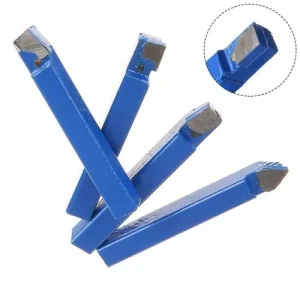
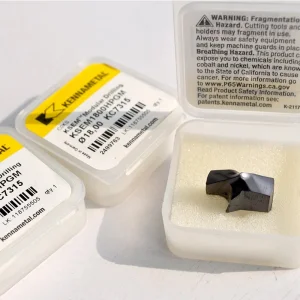
Explore our state-of-the-art indexable carbide inserts, turning tools, and industrial tooling designed for maximum machining efficiency.

In modern subtractive manufacturing, the productivity and cost efficiency of heavy industry rely heavily on a small but critical component: the indexable cutting insert. Used extensively across CNC lathe, milling, and boring systems, these precision tools shape the metallic foundations of the aerospace, automotive, energy, and defense sectors. Globally, the demand for carbide and superhard cutting inserts is accelerating. As manufacturing facilities transition to automated lights-out operations, there is an unprecedented focus on tool life predictability, chip control, and thermal stability.
Industrial cutting inserts are no longer viewed as simple commodities, but rather as highly engineered metallurgical components. Substrates are optimized at the sub-micron scale, coatings are layered molecularly using advanced vapor deposition, and chipbreakers are modeled using three-dimensional finite element analysis (FEA). Achieving safety, regulatory compliance, and consistent tool life is paramount, which is why CE certification has emerged as a crucial benchmark for high-performance cutting solutions in the European and international markets.
Information Gain Insight: The integration of Cobalt-enriched gradient substrates with multilayer CVD (Chemical Vapor Deposition) coatings has revolutionized high-feed rate turning. Modern CE-certified inserts are designed to resist thermal cracking under heavy cyclical thermal stress, ensuring minimal machine downtime during continuous production cycles.
Procurement engineers and production managers look beyond surface-level specifications. Their intent centers on reducing the cost-per-part ratio while maintaining strict dimensional tolerances. To satisfy this user intent, manufacturers must provide detailed technical variables: substrate hardness (HV), coating thickness (μm), fracture toughness (K1c), and feed rate compatibility (mm/rev). Dongguan Carto Tool Co., Ltd. addresses these specific criteria by offering data-backed performance metrics for each industrial insert grade.
Dongguan Carto Tool Co., Ltd. is a leading professional manufacturer specializing in industrial cutting tools, CNC machining tools, milling systems, turning solutions, and precision metal cutting technologies. The company is dedicated to providing high-performance tooling solutions for modern manufacturing industries, including automotive, aerospace, mold processing, machinery production, and general metal fabrication.
Since its establishment, Carto Tool has developed from a small-scale cutting tool workshop into a specialized industrial tooling supplier with integrated R&D, production, and quality control capabilities. In its early stage, the company focused on basic turning and milling tool production for local machining workshops. With the rapid growth of China’s manufacturing sector, Carto Tool expanded its technology base and began developing more advanced CNC-compatible cutting systems to meet higher precision and efficiency requirements.
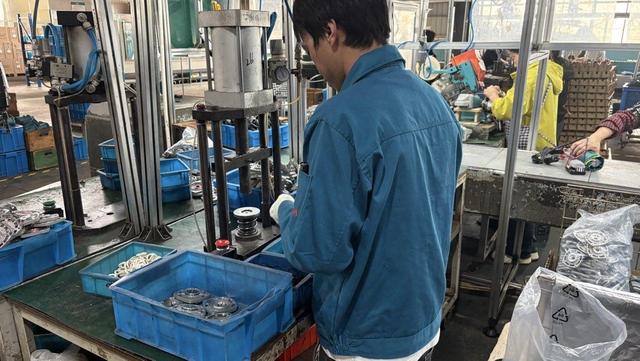
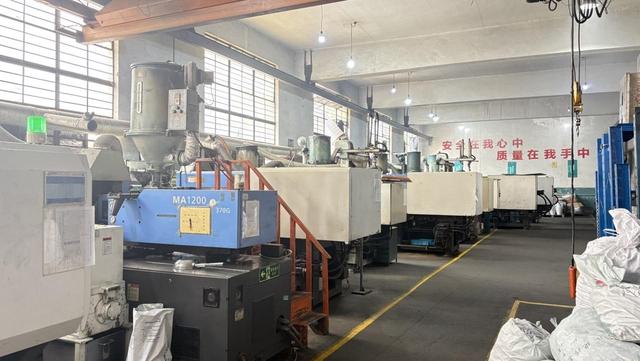
During its development phase, the company invested heavily in carbide material research, coating technology improvements, and CNC tool geometry optimization. By introducing modern production lines and precision grinding equipment, Carto Tool has achieved stable performance and extended tool life across all its offerings. At the same time, we have strengthened our testing systems to improve cutting accuracy, wear resistance, and thermal stability across diverse machining environments.
Utilizing nano-grained tungsten carbide substrates combined with optimal Cobalt percentages to yield unparalleled crack resistance and hardness.
State-of-the-art TiAlN, TiN, and Al2O3 multilayer coatings deposited via high-temperature processes to minimize tool-edge wear.
CE-certified and tested under real-world conditions using heavy CNC machinery to verify tool geometry and vibration dampening properties.
The cutting edge of an insert is subjected to intense stresses, reaching temperatures up to 1000°C and pressures exceeding 1 GPa. To prevent plastic deformation and catastrophic failure, Carto Tool utilizes custom-engineered substrates. By varying the grain size of the Tungsten Carbide (WC) phase from fine to sub-micron, we balance hard wear resistance with dynamic toughness. The addition of cubic carbides (TiC, TaC, NbC) optimizes the substrate’s high-temperature deformation resistance.
On top of the substrate, our deposition coatings act as a thermal barrier:
China’s manufacturing ecosystem provides a distinct competitive advantage for industrial tooling production. Based in Dongguan, a global hub for hardware fabrication, Carto Tool leverages a highly integrated local supply chain. This configuration guarantees immediate access to premium raw materials, rapid prototyping, and automated CNC tooling production lines.
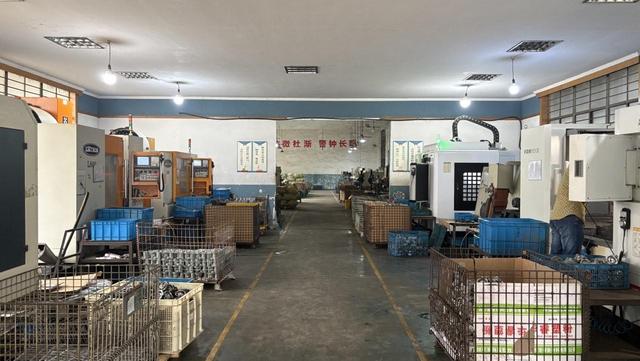
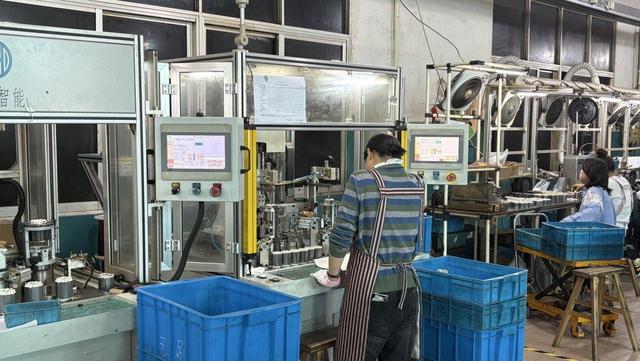
Our factory utilizes advanced German and Swiss grinding centers (such as Walter and Rollomatic) alongside automated optical inspection (AOI) systems. This advanced machinery allows us to maintain a dimensional tolerance of ±0.005mm on our inserts. This high-efficiency manufacturing translates into major cost savings, which we pass on to our global distribution partners. Consequently, buyers receive premium, CE-certified industrial tooling at a highly competitive cost-performance ratio.
Carto Tool's range of industrial cutting inserts is engineered to meet specific localized application challenges:
For international distributors and manufacturing facilities, regulatory compliance is a non-negotiable requirement. CE certification ensures that our industrial cutting inserts comply with European occupational safety, health, and environmental protection standards. Under high rotational speeds, inferior inserts can fracture, posing severe risks to CNC operators. Carto Tool's CE certification guarantees that every tool undergoes rigorous centrifugal, rotational balance, and structural integrity assessments.
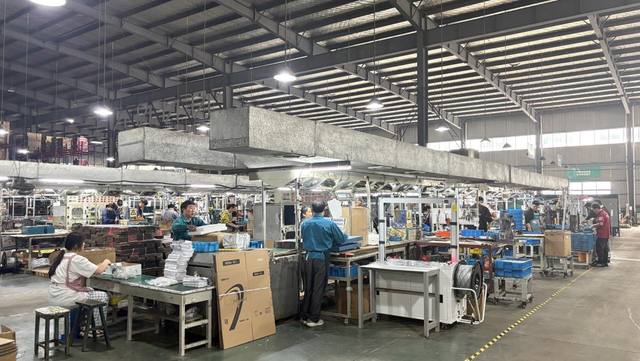
Our ISO 9001:2015 certified manufacturing facility maintains full trace-ability for all raw carbide batches. From initial powder mixing and sintering to coating and final packaging, every step is documented. This strict quality control ensures that our products are dependable, safe, and built to perform.


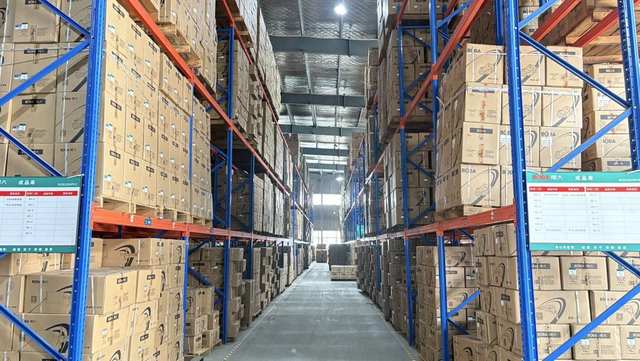
Procuring cutting tools for international operations requires careful supply chain management. Procurement officers must balance tooling costs, shipping times, and batch-to-batch consistency. Carto Tool streamlines this process by offering tailored export solutions, robust packaging to prevent transit damage, and direct technical support.
We work closely with global shipping partners to offer flexible freight solutions (FOB, CIF, DDP). This ensures prompt delivery times, whether for standard replacement inserts or customized OEM tooling designs. Our engineering team can also customize chipbreaker geometries and coating formulas to meet specific material cutting requirements.
Select from our range of modular drilling equipment, deep hole drills, finishing accessories, and high-pressure coolant systems.
 Carto Tool